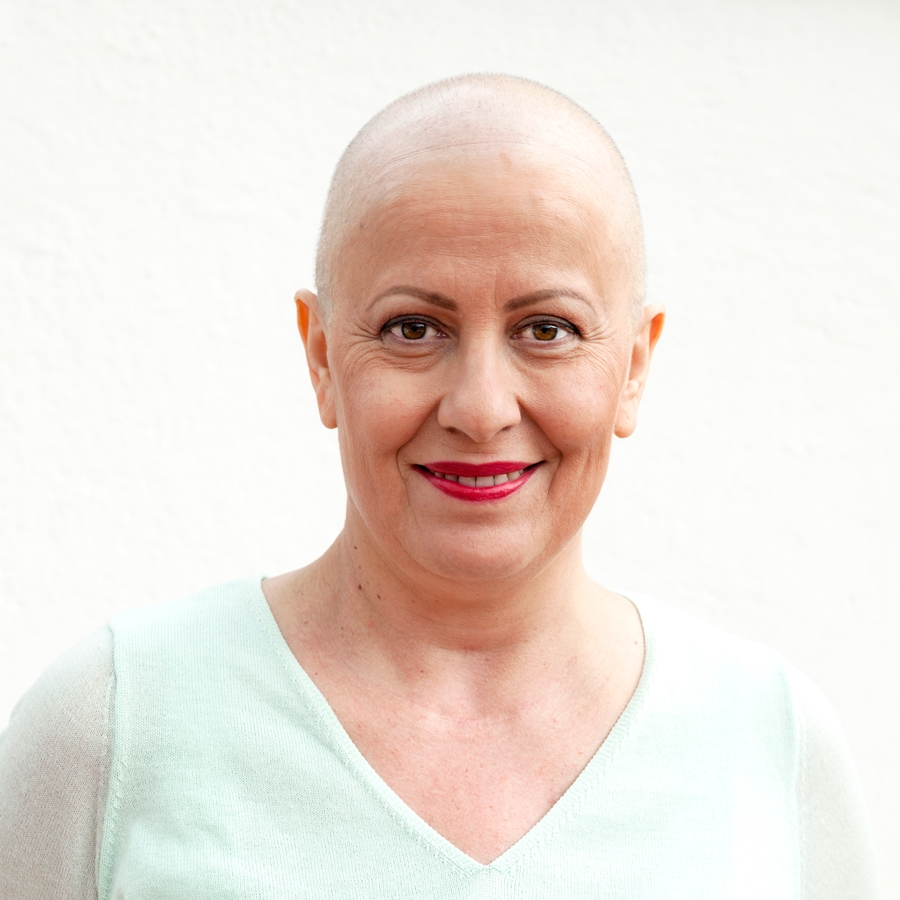

CHEMOTHERAPY & CRANIAL RADIOTHERAPY
When Treatment Means Losing Your Hair
If you’re facing chemotherapy or cranial radiotherapy as part of your cancer treatment, you’ve probably already been told that hair loss is likely. What they might not have prepared you for is how it feels when it actually happens.
What’s really happening to your hair.
These powerful treatments work by targeting rapidly dividing cells—which includes cancer cells, but unfortunately also affects your hair follicles and the glands that keep your scalp healthy. Within just a few days of starting treatment, you may notice your hair beginning to fall out. It’s not gradual like typical hair loss—it can be sudden and complete.
Your scalp might feel tender, dry, or irritated during this time. This isn’t just about appearance—it’s about physical comfort too. The skin that’s been protected under your hair for years is suddenly exposed and sensitive.
The journey back isn’t always straightforward.
Here’s something that might surprise you: when your treatment ends and your hair starts to grow back, it often comes in different than before. Maybe curlier, maybe straighter, sometimes even a different color. Your hair follicles are essentially starting over, and like you, they’ve been through something significant.
This new hair will be fragile at first—more delicate than your original hair and more susceptible to damage from coloring, perms, or even some regular hair products. The timeline is different for everyone. Some women see new growth within weeks, others wait months. Some regain their full head of hair quickly, others find the process takes much longer than expected.
Every experience is unique.
Your oncologist can give you medical timelines, but they can’t predict exactly how you’ll feel when you look in the mirror. They can’t tell you whether you’ll be the woman who embraces scarves and hats, or the one who needs a wig that looks exactly like your original hair, or the one who decides this is the perfect time to try that bold style you’ve always wondered about.
What we can tell you is this: however you’re feeling about your hair loss—whether you’re devastated, relieved to get ahead of it, or somewhere in between—those feelings are completely valid. And whatever choice you make about how to handle it, we’re here to support you.
You don’t have to face this part alone.
While your medical team focuses on your treatment and recovery, we focus on helping you feel like yourself throughout the process. Because feeling confident and beautiful isn’t a luxury during cancer treatment—it’s part of taking care of yourself, and you deserve that care.